Egypt Family Trip-Ep02. Finding Human Warmth Amidst the Ruins of Giants
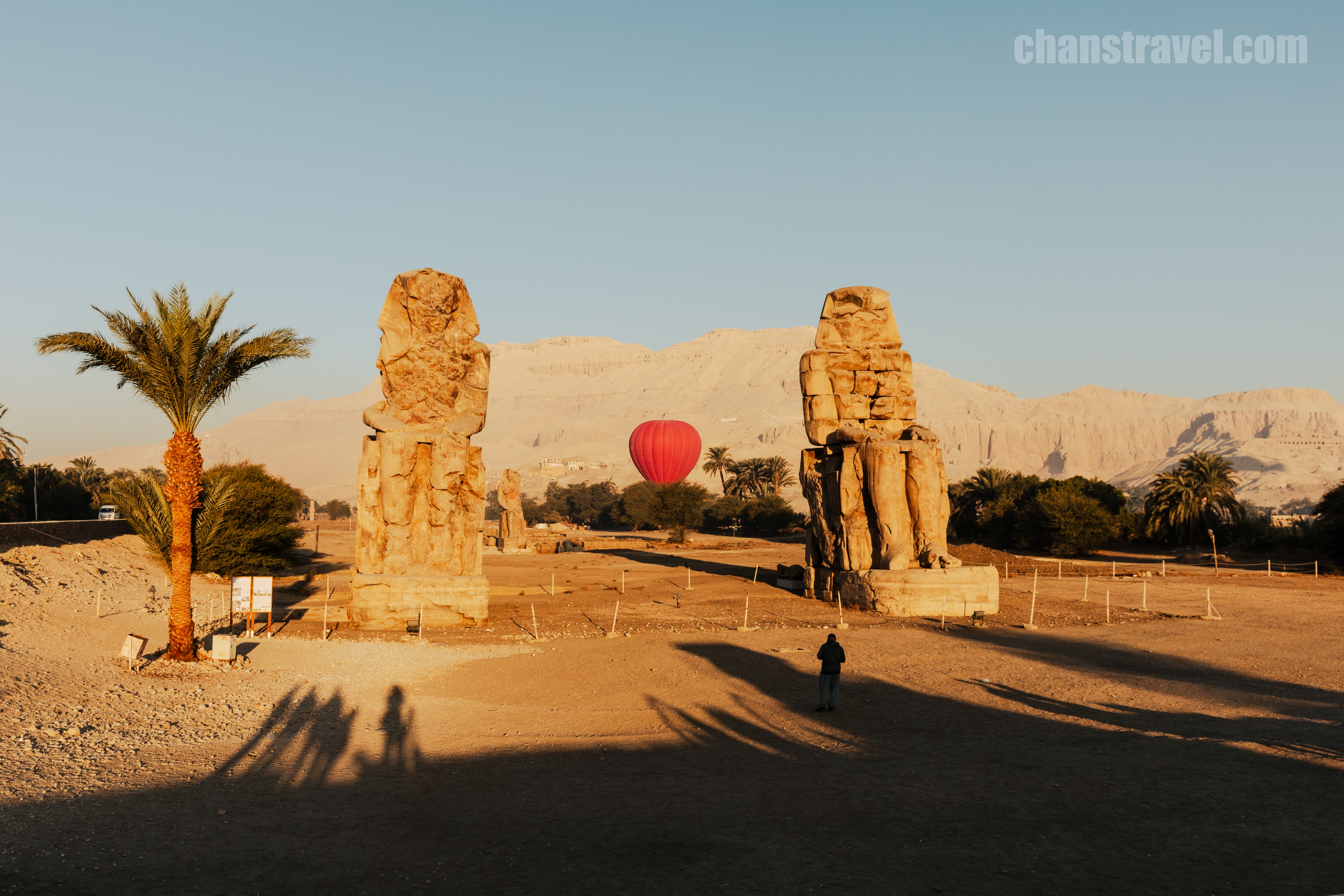
1. The 7 AM Promise: A Luxor Morning Between Vigilance and Trust
The anxiety I felt last night while waiting for a confirmation message vanished like melting snow the moment I saw the car arrive in front of our accommodation at exactly 7:00 AM. Looking back, while delays and uncertainties were always present, Egyptian tours seemed to operate in their own unique "way." It’s a process where you find yourself going with the flow after alternating conversations with three or four different people who seem to belong to the same company to coordinate the schedule.
The unease I felt toward EMO Tour, a large travel agency, turned into relief only after meeting our guide. However, having experienced Egypt in 2014, my wife and I could not let our guard down, knowing the characteristic shrewdness of Egyptians. Truthfully, I had many concerns while preparing for this trip. As the children grew older, I wanted this to be a journey of learning rather than just taking "proof shots" at famous sites. I tried cramming with YouTube videos, but it was not enough to properly convey thousands of years of layered history to my children. Ultimately, I chose a tour from TripAdvisor that had high ratings and a reasonable price (about 120,000 KRW, including a vehicle, driver, and professional English guide).
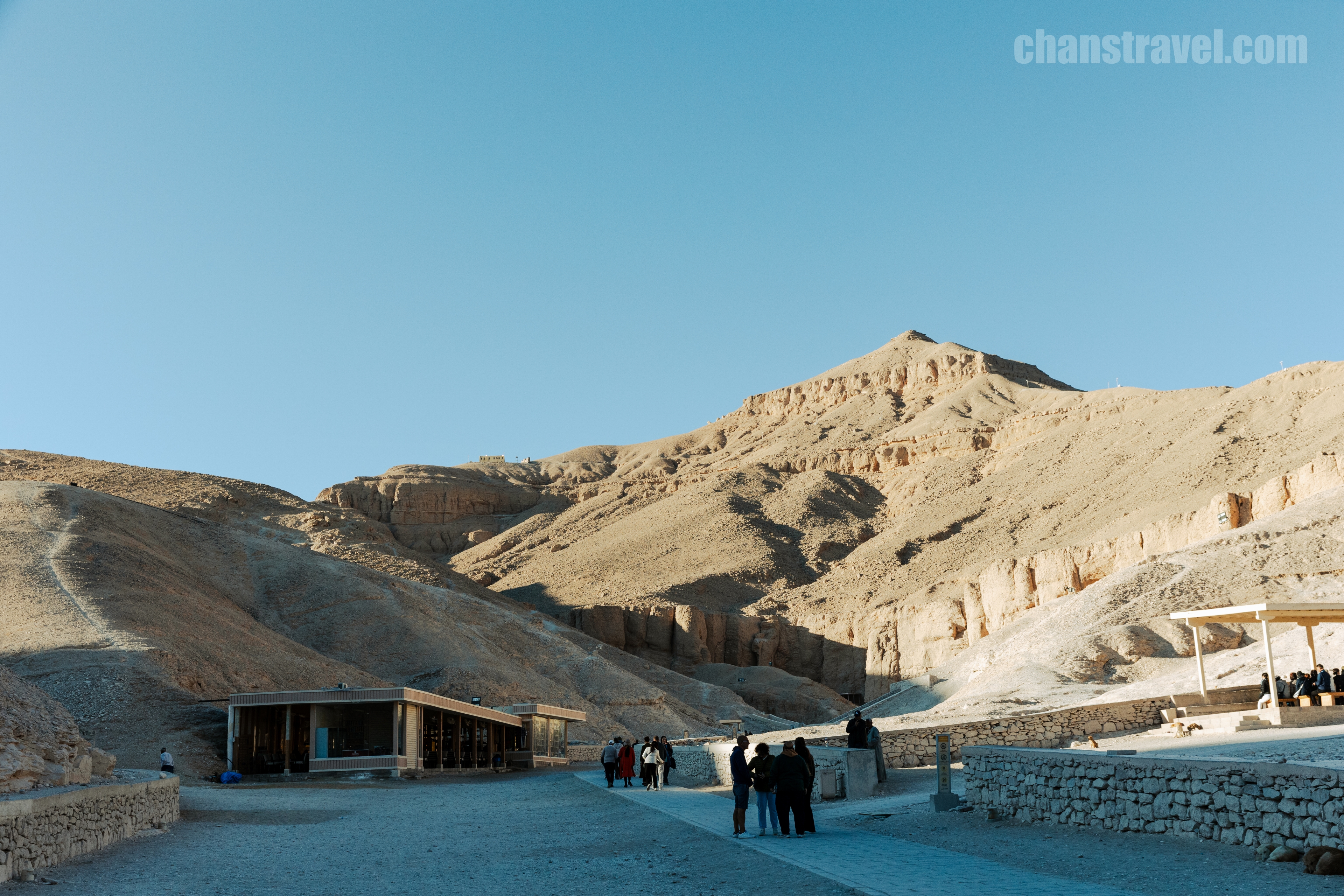
2. Guide Bahgat: Bringing Ancient Language into the Present
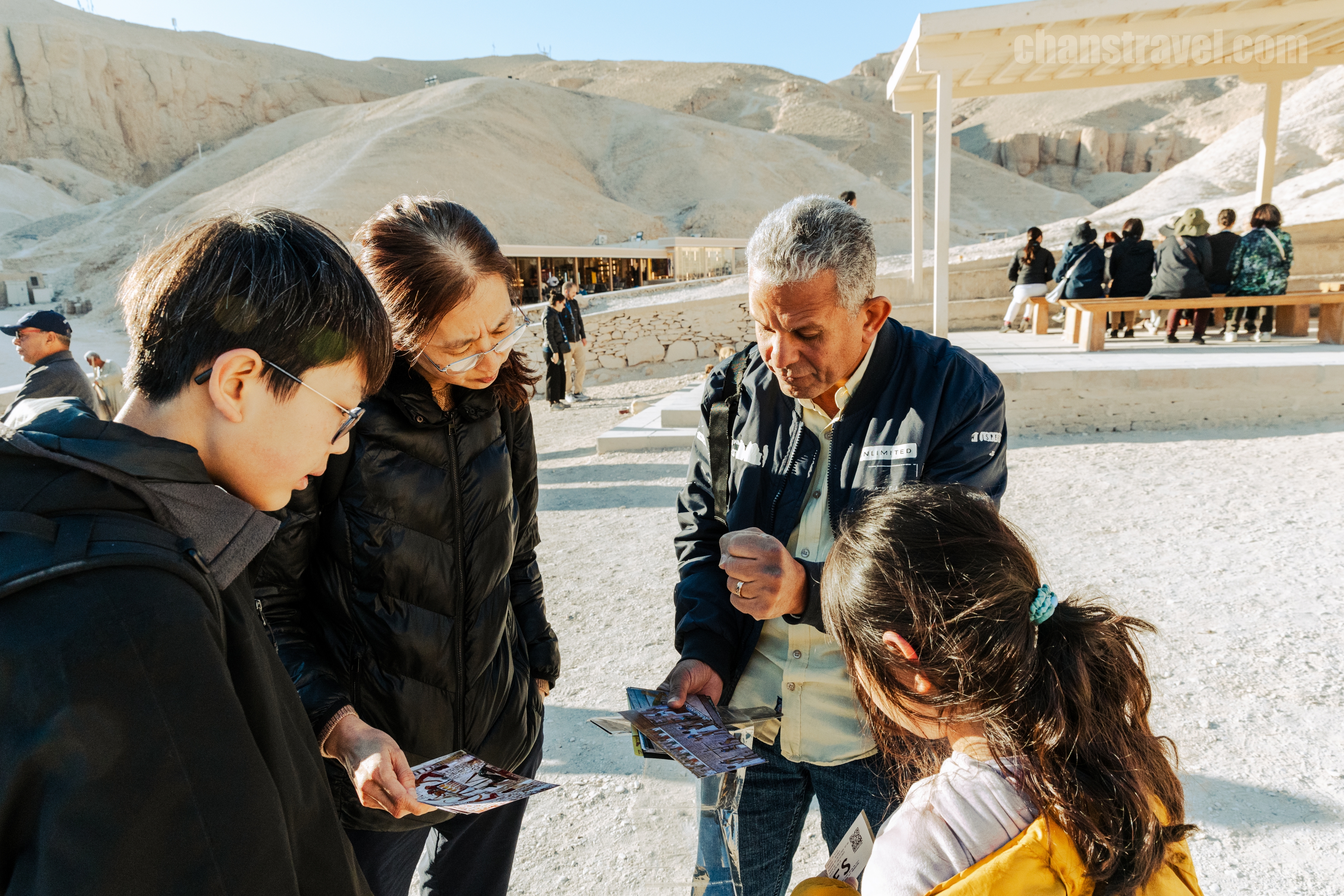
It was our guide, Mr. Bahgat, who breathed life into these massive stones as we moved through the Colossi of Memnon on the West Bank, the Valley of the Kings, and the Temple of Hatshepsut. He was an expert with a degree in Egyptian history, a true Egyptian of Coptic descent. He wasn't just someone reciting facts. When he read the hieroglyphs carved into the walls on the spot and translated the past from thousands of years ago into modern language, it felt as if history were coming alive through his lips.
What was particularly touching was his attitude toward our children, aged eight and fifteen. He didn’t treat history as mere gossip, yet he patiently and passionately continued his explanations at the children's eye level. While I, as a photographer, pressed the shutter, the children were facing the "real" lives of ancient people hidden within the vast ruins through Bahgat’s voice. My children, who had learned about ancient Egyptian civilization in their British school, were much more immersed in Bahgat’s stories and hieroglyphic quizzes than we were. The first tomb Bahgat led our family to was the Tomb of Ramesses IV.
3. Ramesses IV: A Massive Sanctuary Forged from Desperation
Facing the tomb of Ramesses IV amidst the scorching heat of Luxor’s West Bank, one can physically feel the desperation he had regarding "time." Did he sense that his reign would not be very long? Despite reigning for only six years, he chose an unprecedented "speed battle," doubling the tomb construction workforce from 60 to 120 people. Paradoxically, that urgency created a level of focus unseen in the history of the Valley of the Kings, allowing us to encounter such an exquisite and magnificent tomb today.
3-1. A Red Sarcophagus Proving a Land of Giants
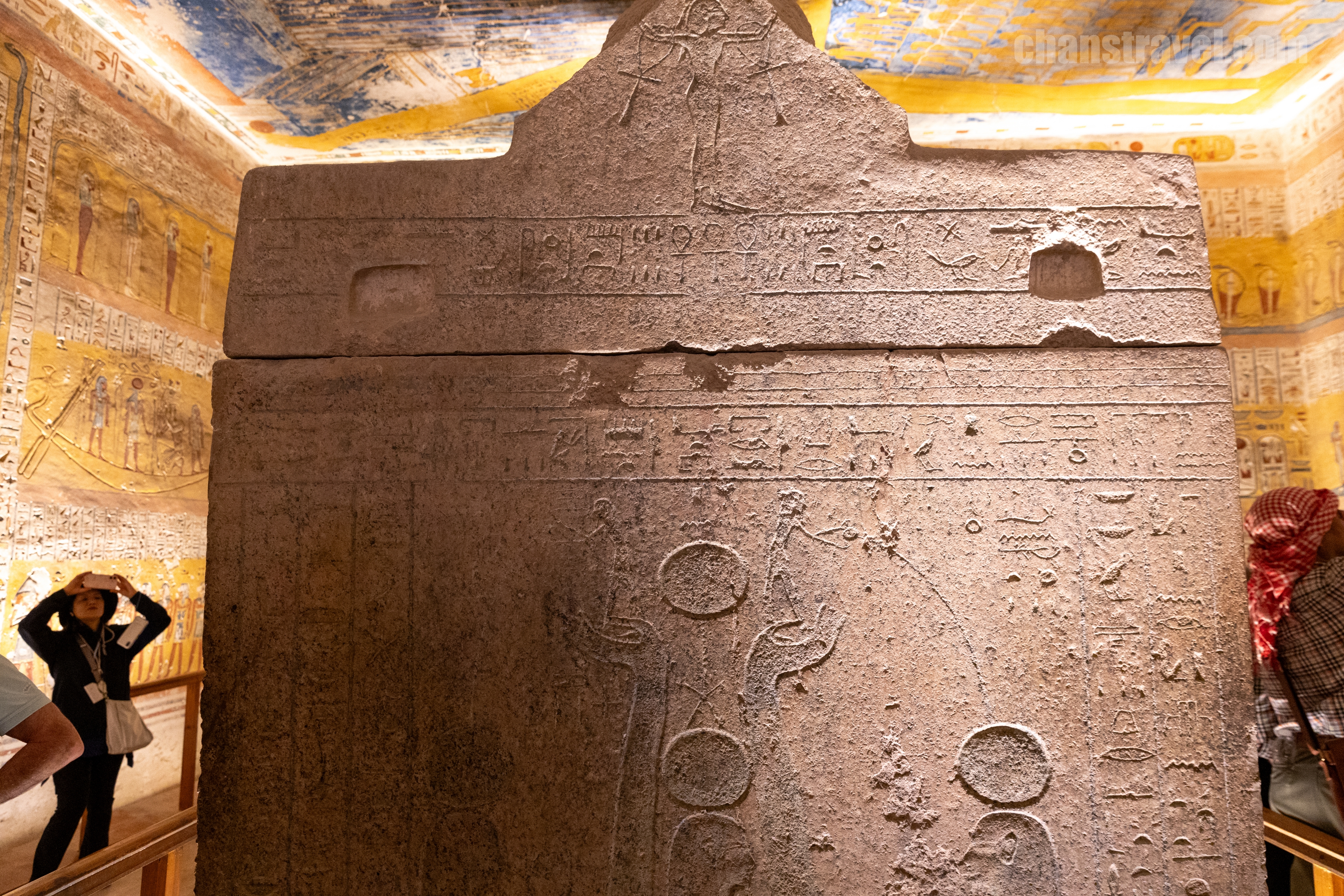
Entering the burial chamber, a massive red granite sarcophagus—fitting my theme of "Land of Giants"—overwhelms the gaze. Standing at 3 meters tall, this sarcophagus is among the largest discovered in the Valley of the Kings. The intricate sacred scripts densely covering its vast surface silently testify to the god-like craftsmanship of the Egyptian stonemasons of that time.
3-2. An Ancient Guestbook Spanning Millennia
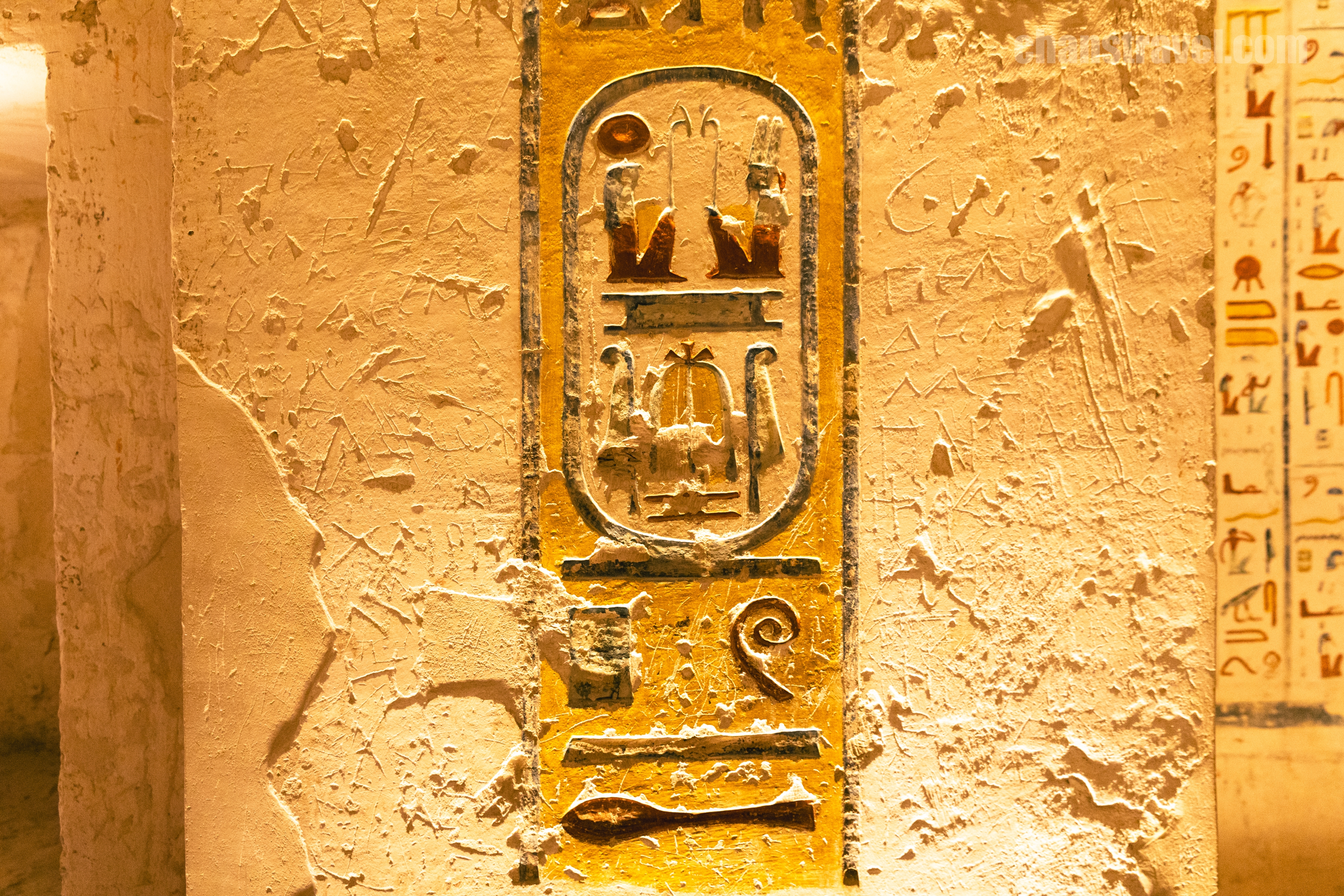
An interesting fact is that this tomb was already a famous "tourist attraction" in ancient times. The walls are filled with about 1,000 ancient graffiti inscriptions in Greek, Latin, and Coptic. It evokes a strange sense of kinship to realize that travelers thousands of years ago were just like me—marvelling at these murals and wanting to leave their mark.
3-3. Crosses Blooming in the Pharaoh’s Sanctuary
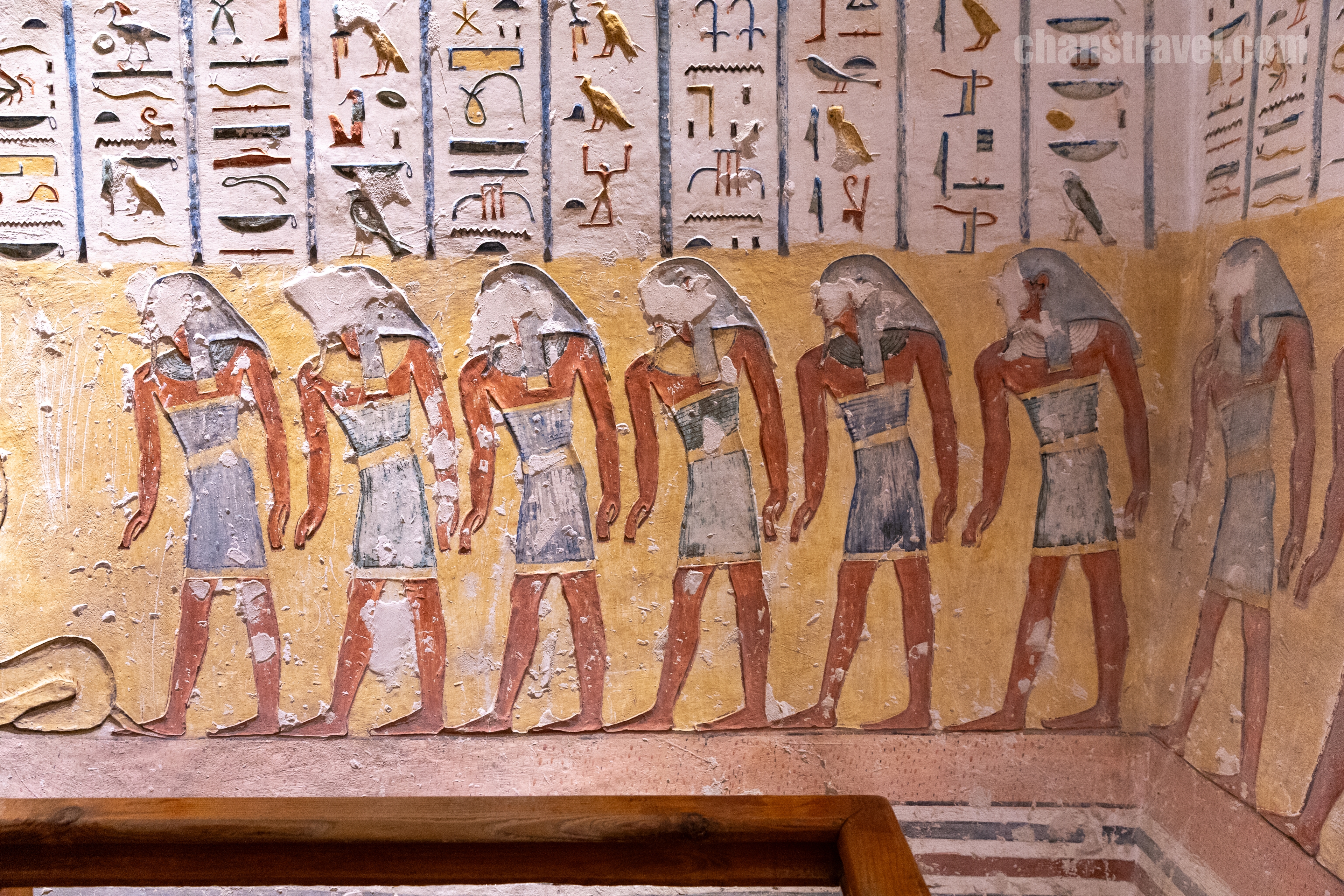
Over time, this Pharaoh’s tomb transformed into a refuge, residence, and even a church for early Coptic Christians. The rustic cross patterns carved right beside the ancient Pharaoh’s hieroglyphs represent a dramatic scene of how different beliefs and eras have coexisted in one space.
4. The Tomb of Ramesses VI: The Miracle of the 'Debris' That Guarded Tutankhamun’s Treasure
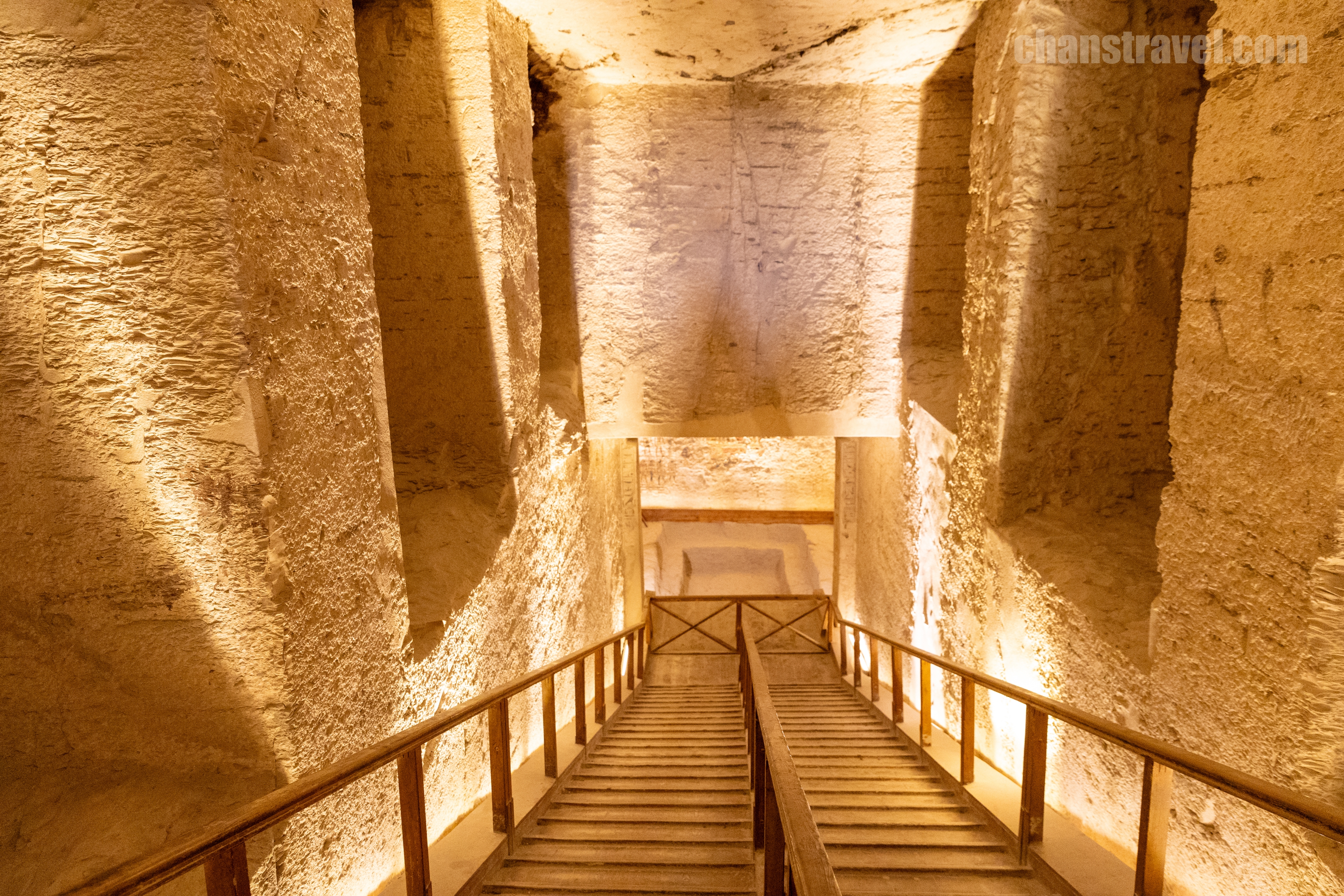
The greatest achievement of Ramesses VI (paradoxically) lies in the "trash" he discarded while building his tomb (KV9). The staggering amount of rubble and labor materials excavated while digging his tomb completely buried the entrance to Tutankhamun’s tomb (KV62) located just below.
Grave robbers never dreamed there would be another tomb beneath the massive resting place of Ramesses VI. Consequently, the "construction site waste" of Ramesses VI acted as a guardian deity, perfectly protecting Tutankhamun for 3,000 years. The secret behind Howard Carter’s exclamation, "I see wonderful things," was actually due to the indifferent construction management of Ramesses VI.
4-1. "Too much trouble to dig a new one..." The Frugal Pharaoh Who Hijacked His Nephew’s Tomb
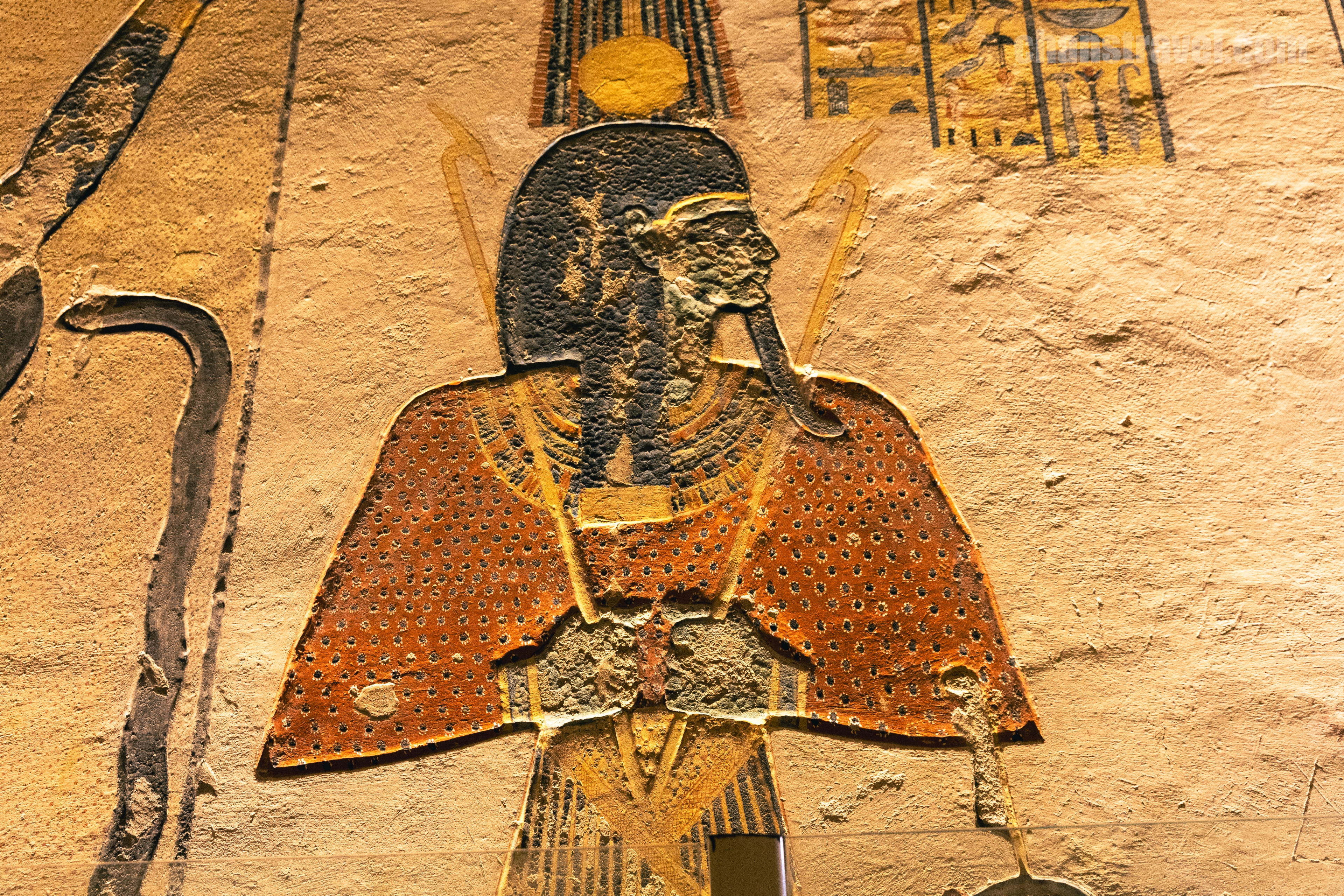
In truth, this magnificent tomb in the photos was not his from the start. It was originally a project ambitiously begun by his nephew, Ramesses V. However, Egypt was going through quite a difficult economic period at the time.
Short on resources after his enthronement, Ramesses VI decided to expand his nephew’s tomb and paint over it with his own name rather than going through the trouble of digging a new one. Looking at his tendency to carve his name onto the monuments of previous kings as well as this tomb, it is clear he was a Pharaoh who skillfully navigated between pragmatism and self-display.
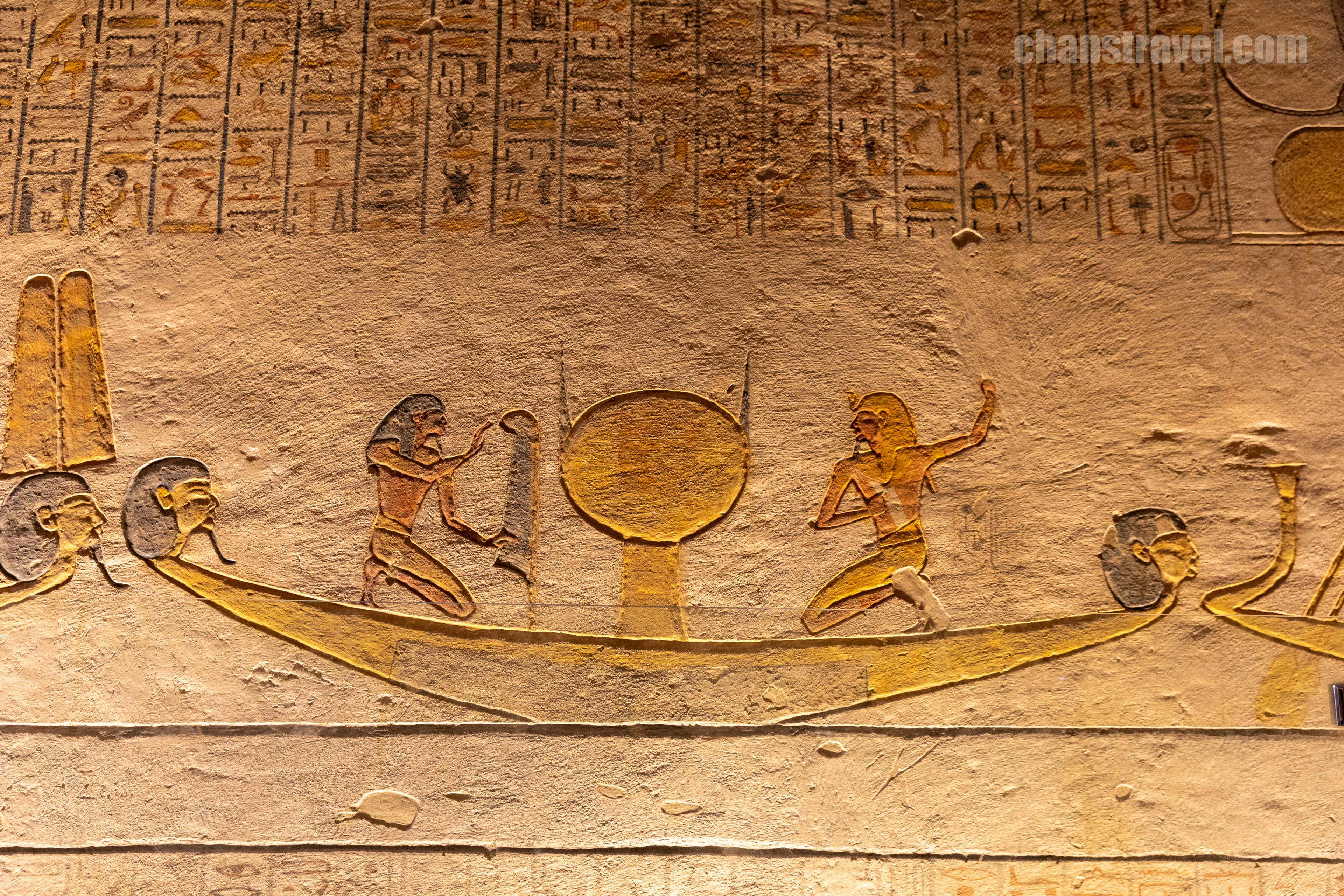
4-2. 1,000 Graffiti Left in an Ancient 'Tourist Hotspot'
This tomb was already a famous "tourist must-see" for people in the ancient Greek and Roman eras. Interestingly, travelers at that time mistook this place for the tomb of Memnon, the hero of the Trojan War.
If you look closely at the tomb walls, you can see peculiar graffiti over the hieroglyphs. There are about 1,000 graffiti marks written in Greek and Latin. Messages like "I was here" or "The murals are really pretty," much like modern blog comments, are carved in handwriting from 2,000 years ago. It makes me chuckle to realize that the human instinct to record remains unchanged regardless of the era.
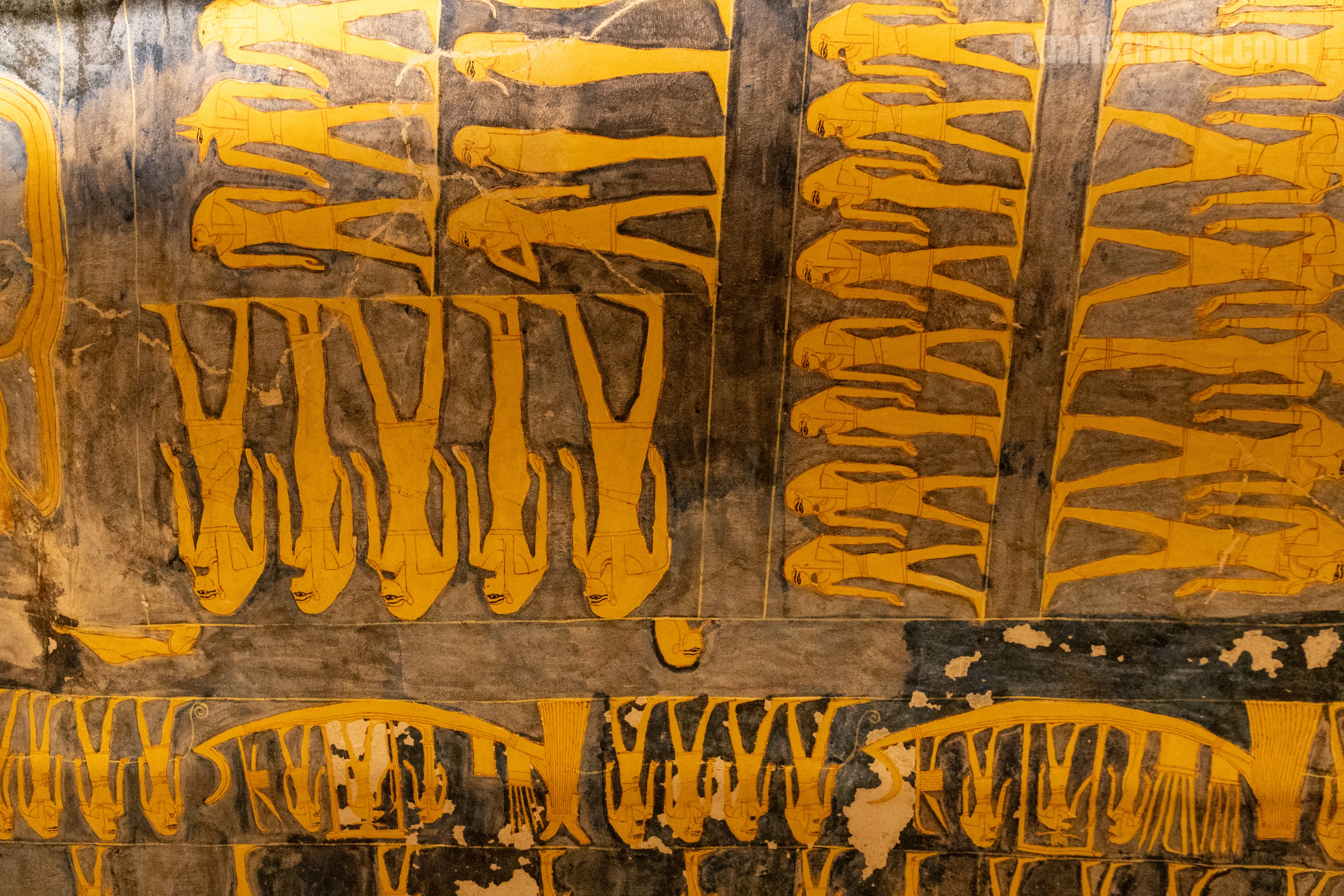
4-3. Mysteries of the Universe Carved on the Ceiling: The Night of Goddess Nut
Artistically, the tomb of Ramesses VI undoubtedly shows the "aesthetic pinnacle" of the Valley of the Kings. The mural of the sky goddess 'Nut' filling the burial chamber ceiling is particularly breathtaking. This astronomical map, depicting the process of Nut swallowing the sun every evening and rebirthing it in the morning, showcases the essence of the ancient Egyptian worldview.
Walking along the long, straight, magnificent corridor, sacred texts guiding one through the afterlife and exquisite murals seem to pour down toward you. While the tomb of Ramesses III has the charm of a "bent corridor," the tomb of Ramesses VI is like an "endless, magnificent epic".
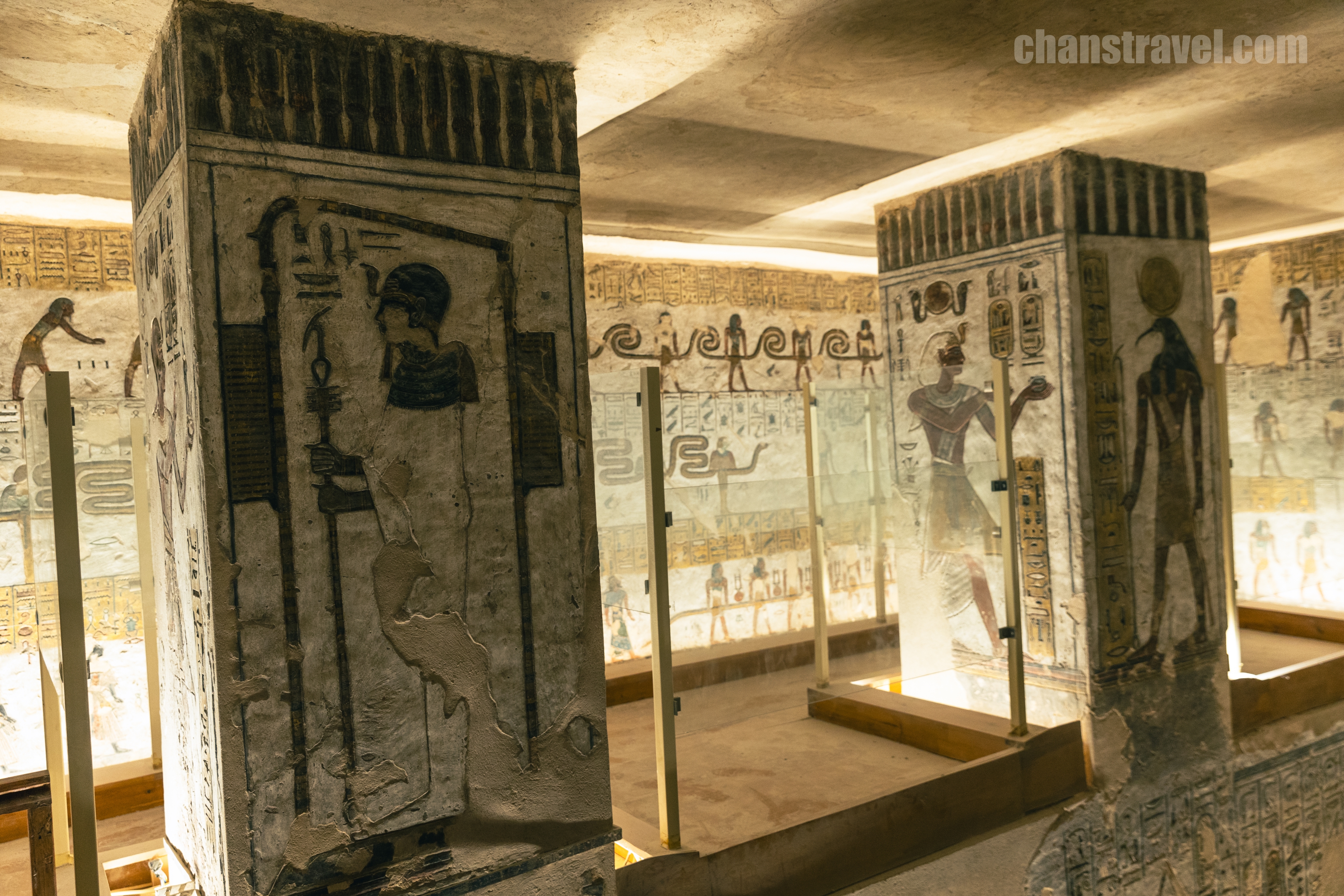
5. Ramesses III’s Pragmatism: The Tomb with a Bent Angle (KV11)
The story behind the tomb of Ramesses III in the Valley of the Kings is very human. Originally, his father, Setnakhte, began digging this tomb. However, the workers made a huge mistake and broke through the ceiling of the neighboring tomb of Amenmesse (KV10). Since invading the burial grounds of another king was considered a bad omen and a sign of disrespect, the father abandoned the project. But his son, Ramesses III, was different. He continued the construction by shifting the direction slightly at the point of the accident. Thus, this tomb is not a straight line but has a bent angle in the middle. Thanks to his long 31-year reign, this tomb was completed as the "Tomb of the Harpers," the longest (188m) and one of the most magnificent in the valley. History is sometimes made through the intersection of such accidents and pragmatic choices.
According to Bahgat’s explanation, Pharaohs carried out three major national projects upon taking power. He said this was a sort of ancient welfare or "New Deal" policy to provide jobs and distribute food to farmers during the off-season when farming was difficult. Therefore, he explained that the longer a king lived, the deeper the tomb and the more magnificent the wall decorations.
- Eternal Sanctuary (Tomb): For eternal life in the afterlife, they dug secret underground tombs in the Valley of the Kings from their first day on the throne. The scale of the tomb was evidence of the length of the king's reign.
- Political Alliance (Temple): They built and expanded massive temples like Karnak and Luxor, using divine authority to stabilize their reign. This was also a sophisticated political act to gain the support of the wealthy priesthood.
- Perpetuity of Name (Monuments): Believing that the soul would perish if the name were forgotten, they were obsessed with carving their achievements and names (cartouches) onto statues and walls throughout Egypt.
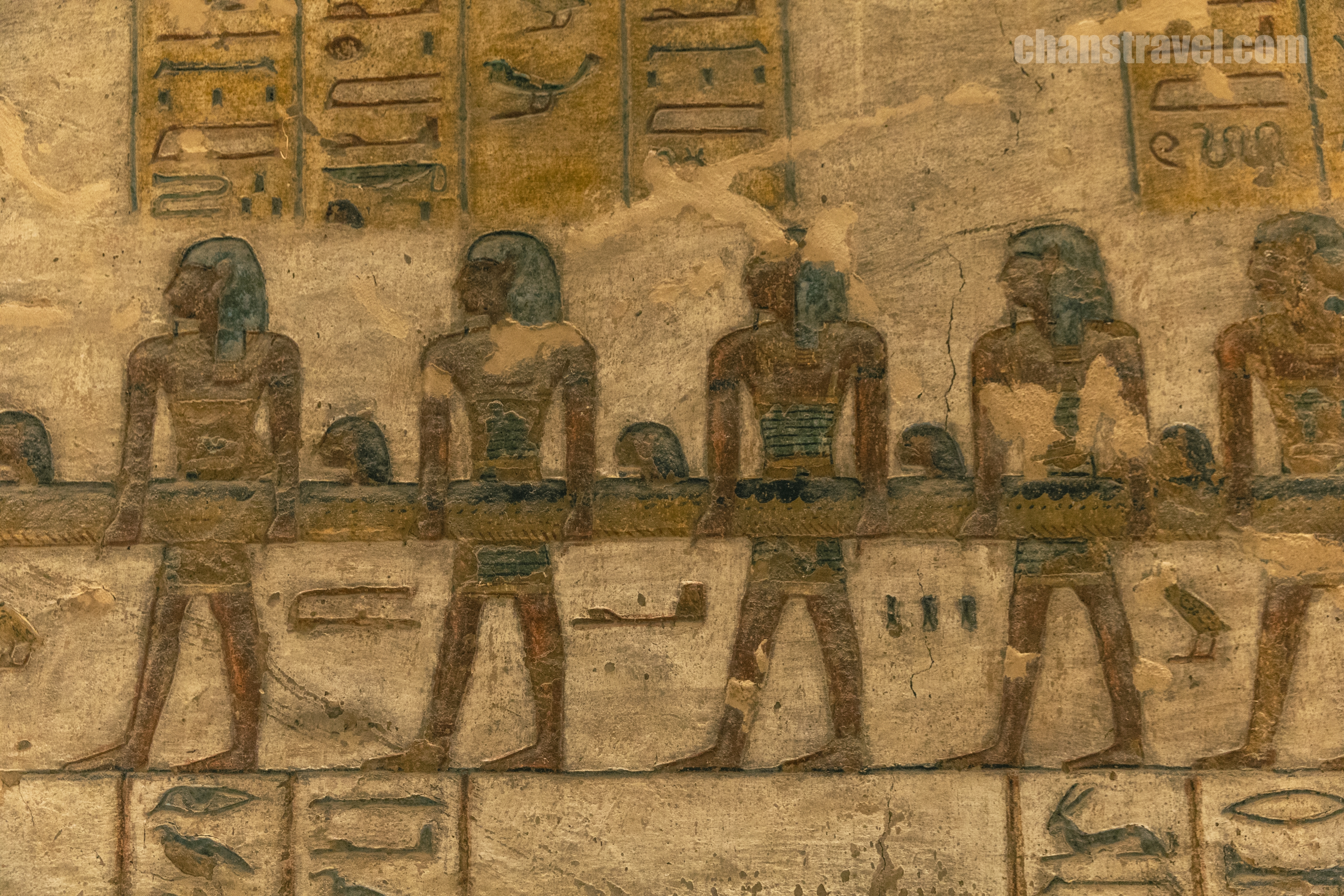
6. The Real Protagonist of Tutankhamun: The Water Boy 'Hussein Abdel-Rassul'
While we think of Howard Carter when talking about the history of the tomb, it was actually a 12-year-old boy, Hussein Abdel-Rassul, who discovered the first step leading to Tutankhamun’s tomb on the morning of November 4, 1922. The boy’s fingertips hit a hard stone slab while he was digging in the sand to stand up a water jar for the workers, leading to the discovery of the century. In recognition of the boy's contribution, Carter placed a magnificent "scarab necklace" found in the tomb around his neck and took a photo. The photo of the boy wearing the necklace remains the most iconic scene in the history of archaeology.
The boy’s family, the 'Abdel-Rassul' family, is a local legend. It was the ancestors of this family who first discovered the secret cave (DB320) in 1871, where the mummies of over 30 Pharaohs, including Ramesses II, were hidden. They were grave robbers who made a living selling artifacts for decades, but they were also contributors who eventually cooperated with archaeological authorities to reveal the Pharaohs to the world. A dual history of being 'grave robbers and guardians' flows through the blood of this family.
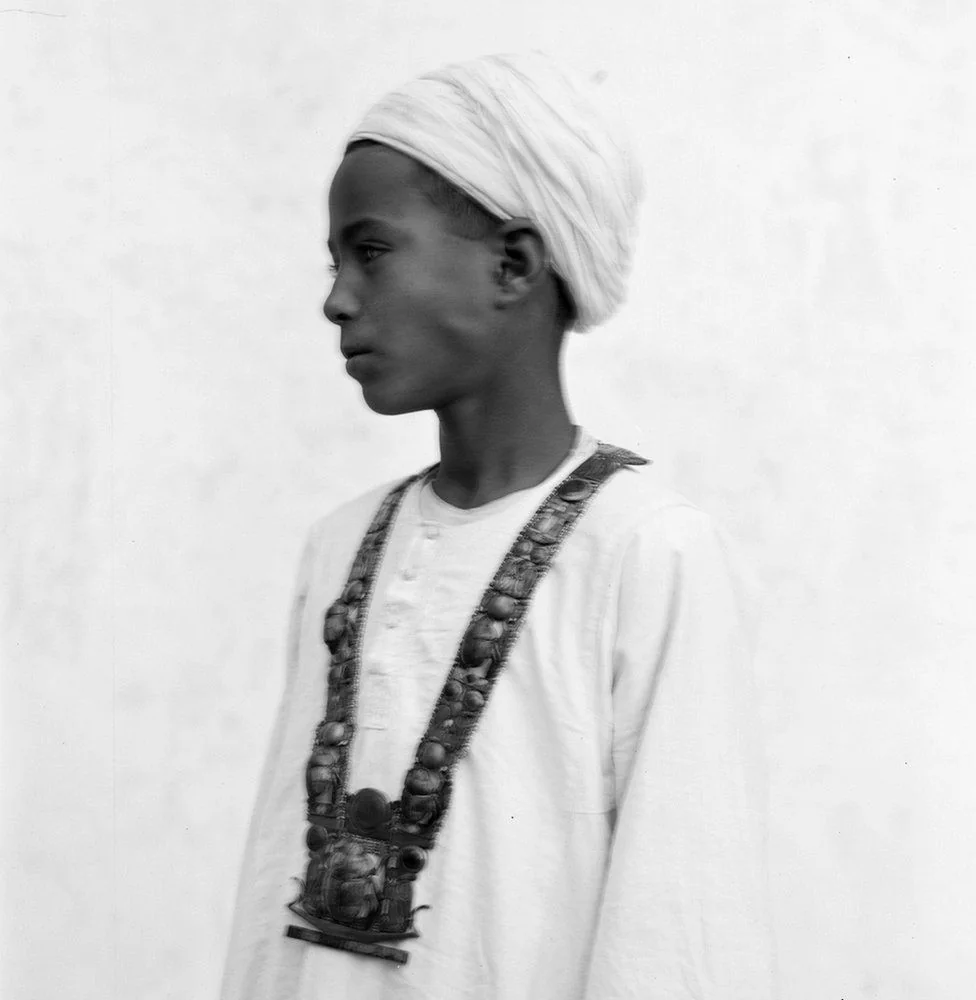
6-1. Descendants Still Guarding the Place
The surprising fact is that Hussein’s descendants still live here today. They operate the 'Marsam' hotel or cafes near the Valley of the Kings and often show visitors the photo of their grandfather's necklace, which they cherish like a family heirloom. Despite the government’s relocation policy, they still work as guides or excavation site supervisors, assisting archaeologists. For them, this place is not just a ruin but a home passed down through generations, and their pride in being 'the people who know the secrets of the Pharaohs' remains valid across thousands of years.
7. Unexpected Quality: Honest Hospitality Without Pressure
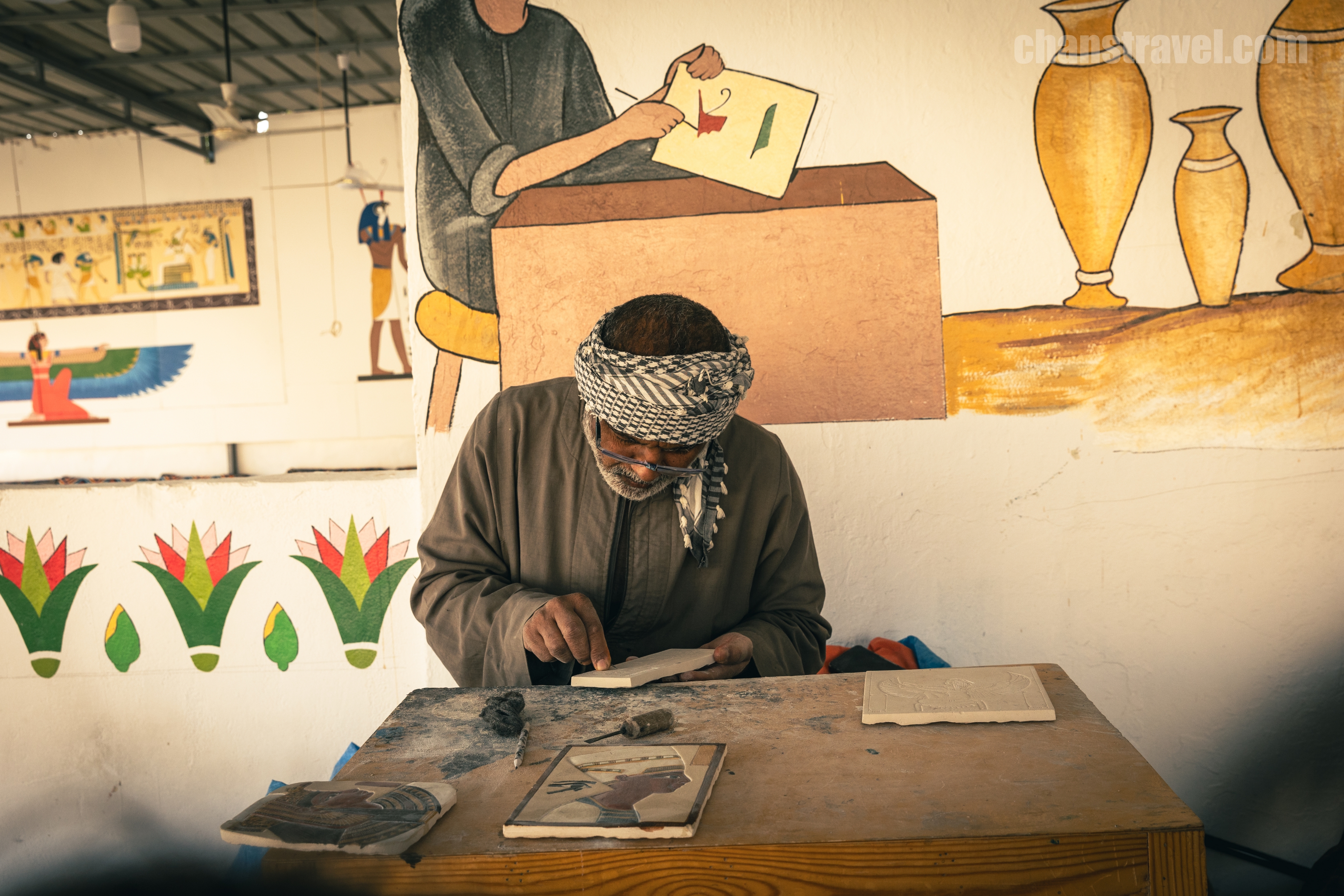
After touring three tombs in the Valley of the Kings and before visiting the Temple of Hatshepsut, our guide suggested we stop by a workshop run by the descendants of Hussein Abdel-Rassul to see the manufacturing process and the showroom. I readily agreed. The exhaustion from "forced shopping" often experienced in package tours was absent here. Even when visiting the craft demonstration hall, I felt no pressure to purchase. Instead, we were greeted with a warm cup of tea, clean restrooms, and sincere hospitality. For our family, who often felt like "tourist" commodities in many countries, this respect as human beings felt truly fresh and dignified.
In the next part, we’ll share our experience with the local schoolgirls at Hatshepsut and continue our story at the Karnak and Luxor Temples.