2026. 1. 20. 19:22ㆍTRAVEL | 여행/Africa | 아프리카
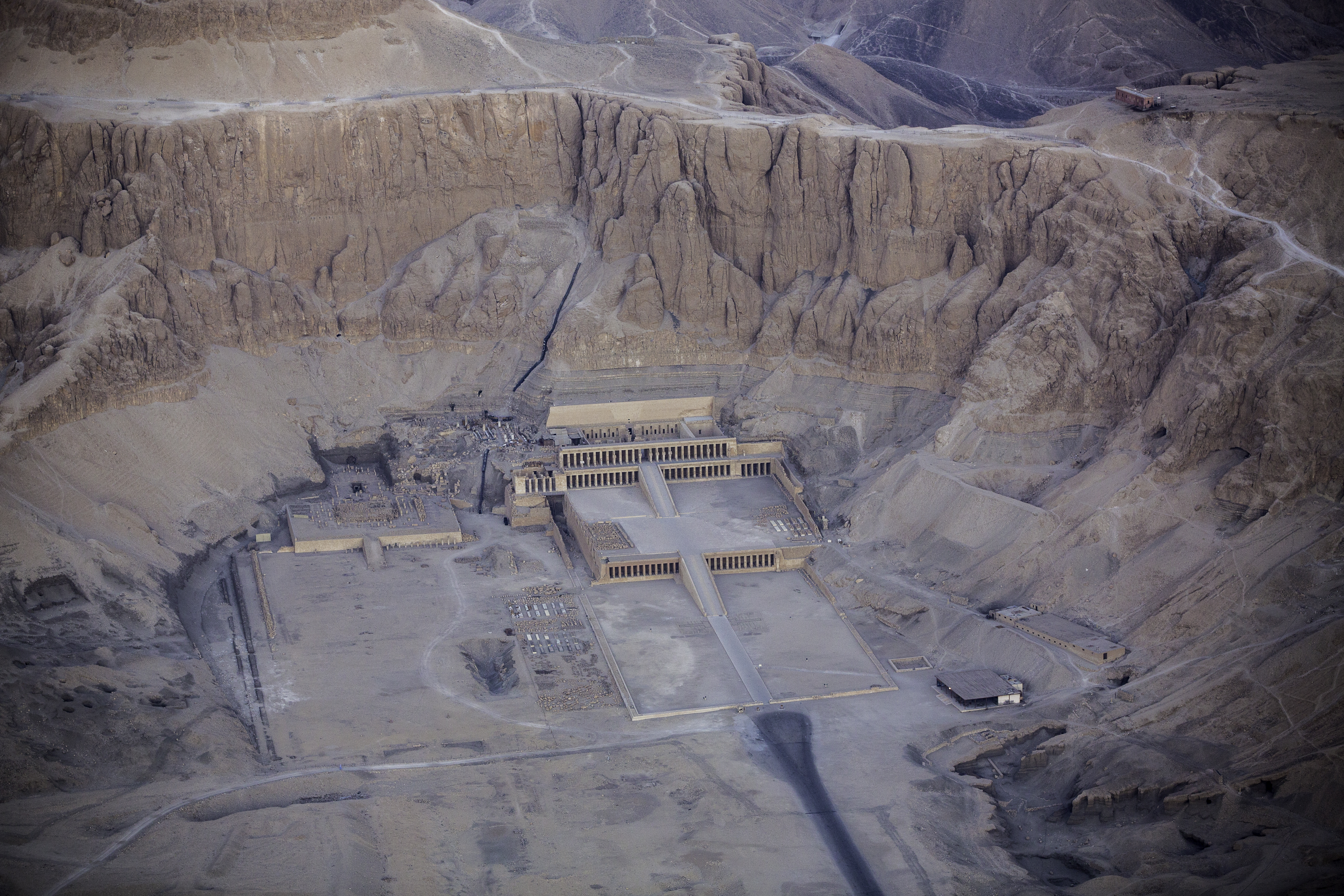
1. Mortuary Temple of Hatshepsut: The Queen’s Ambition Etched into Cliffs
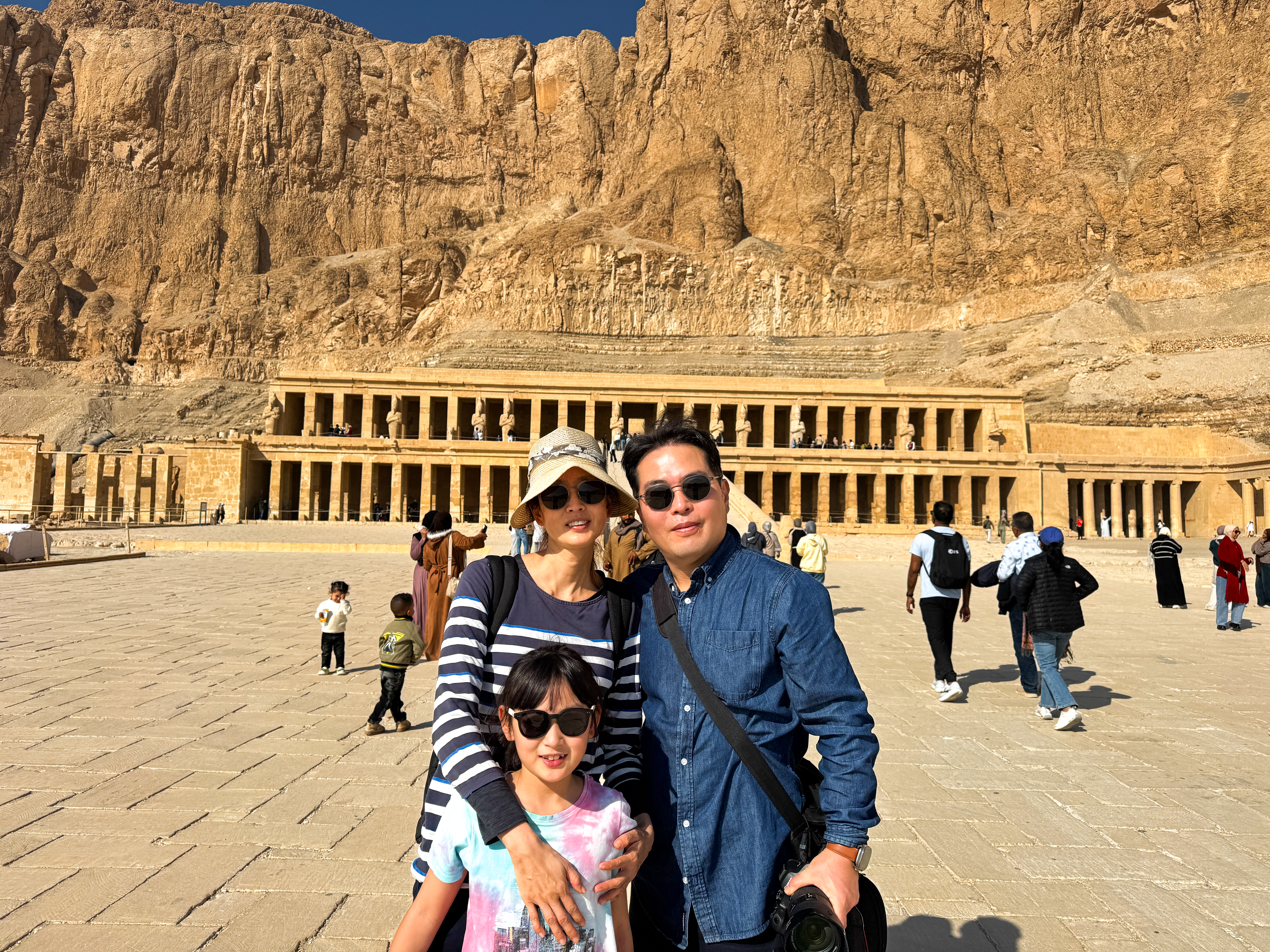
After taking a brief break at the Alabaster workshop, we headed toward the Temple of Hatshepsut. This site is also a prominent landmark that stands out most clearly during the hot air balloon experience over Luxor, which I will share in the next post. Looking down from above, the temple presents a wondrous sight as if the massive cliffs are embracing it, and historically, it is a place filled with endless fascinating stories. Knowing that we were from the UK, Bahgat cracked a joke, saying that many British visitors playfully call this temple 'Hot Chicken Soup' to help remember its name. Thanks to his witty remark, the unfamiliar name Hatshepsut felt instantly more approachable.
Behind this temple, which stands like a painting beneath magnificent cliffs, lie plot twists that could rival any soap opera. The five secrets regarding the woman who became a "King" herself, Hatshepsut, make one view this massive structure in a completely new light.
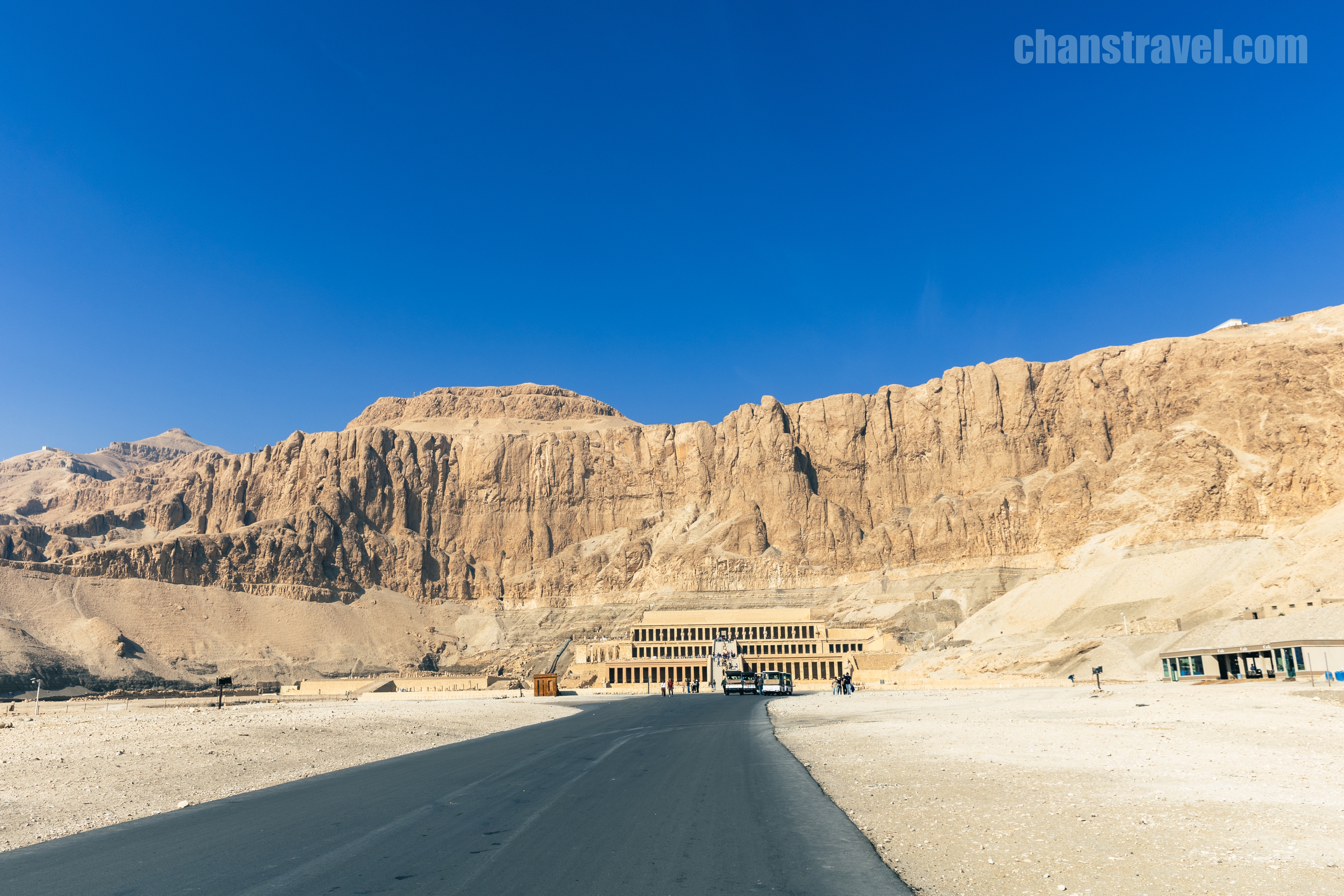
1-1. An Unexpected Fan Meeting in Front of the Ticket Office: "Welcome to Egypt!"
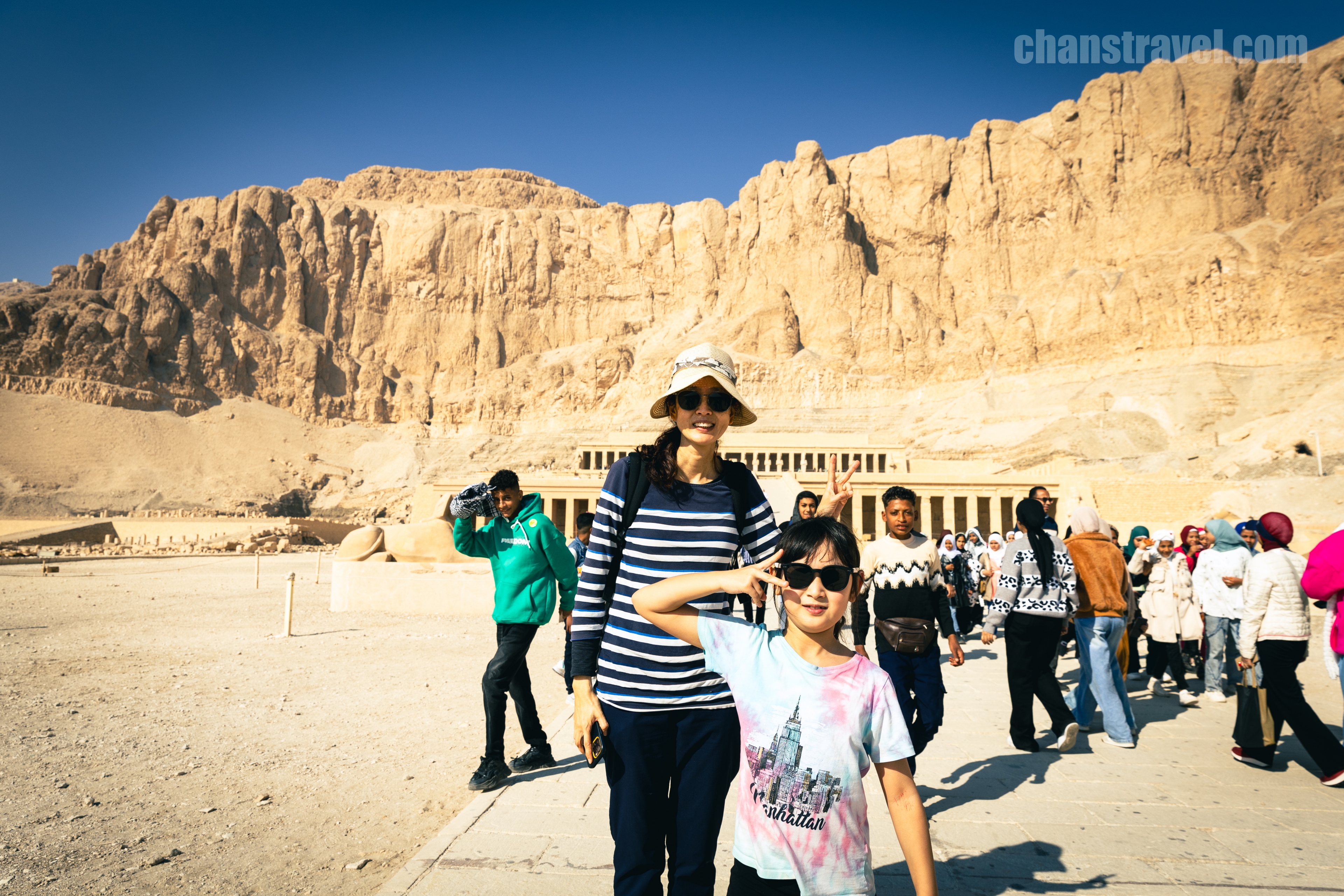
While purchasing tickets at the counter, a group of about 100 schoolgirls on a field trip stared at our family with curiosity. At first, they shyly greeted us from a distance, but soon they approached one by one, asking to take photos together. Among us, my daughter Yese was undoubtedly the star of the show for these Egyptian girls. Perhaps an East Asian child seemed so curious and pretty to them; the girls lined up as if they were meeting a celebrity to take a photo with her. Many even left a shy kiss on Yese's cheek after the photo. Their curiosity-filled smiles and warm hospitality felt as though they would linger in my heart much longer than the overwhelming grandeur of the temple itself.
1-2. Luxor’s Strict Standards: "Student ID is a Must"
However, the administration in Luxor was not as tender as the girls' smiles. In Cairo, they didn't really demand a student ID if the person didn't look too old, but Luxor was different. When trying to buy a student ticket for my 15-year-old son, Yedam, the ticket officer was firm. Discounted tickets were absolutely impossible without an ISIC international student card or a valid ID in English with a photo. In the end, Yedam had to purchase an adult ticket. It was a moment where I felt deeply that travelers to Luxor must carry proper supporting documents.
동영상 서비스가 종료되어 해당 콘텐츠를 재생할 수 없습니다.
1-3. Secrets of Hatshepsut, Egypt's Ultimate 'Girl Crush'
1. "I am a King, not a Queen": Since the role of Pharaoh was reserved for men, she wore a false beard on her chin and had her statues depicted with a muscular physique. She was a true iron lady who insisted on being referred to as "He" rather than "She" in records.
2. 'Modern' Architecture 3,500 Years Ago: Its perfect symmetry and straight lines remind one of a modern art museum. She planted 'myrrh trees' brought from trade expeditions in the temple's courtyard, and traces of those withered stumps still remain today.
3. A Secret Scandal with a Genius Architect?: There are strong theories of a romantic spark between the queen and Senenmut, the architect who built the temple. Senenmut was even caught trying to secretly build his own tomb directly beneath hers. Did he wish to stay by her side forever, even in death?
4. A Stepson's Petty but Terrifying Revenge: After her death, Thutmose III, who reclaimed power, carried out a 'damnatio memoriae' (erasure of memory) by chiseling away Hatshepsut's face and name from temples across the country. Yet, ironically, these chiseled marks made it easier for archaeologists to identify her existence.
5. A Mummy Identified by a Single Cavity: In 2007, the decisive clue that identified an unnamed mummy as Hatshepsut was a 'molar fragment'. A tooth fragment found in a box bearing her name fit perfectly into the missing molar socket of the mummy, like a puzzle piece, reclaiming the queen's name after 3,500 years.
동영상 서비스가 종료되어 해당 콘텐츠를 재생할 수 없습니다.
2. Lunch on the West Bank: Price Gouging and 'Special Offers'
The price gouging at the West Bank restaurants was blatant. At $20 to $25 per person including drinks, the prices were excessive compared to the local cost of living. Even the place our guide, Bahgat, took us was expensive enough for our family of four to pay over 100,000 KRW. Since our family doesn’t drink juice or soda at all, we initially declined the juice and only ordered water. However, the waiter returned, claiming the owner had told him to lower the price, and eventually proposed a 'special offer'—half price on all beverages. Caught in that persistent sales pitch, I ended up ordering two juices for the children and a coffee for myself. While I was thoroughly satisfied with every other service Bahgat provided during this tour, the lunch experience was the one thing that fell short of my expectations.
The real incident occurred after the meal. Yedam had left his expensive, custom-made orthodontic retainer, which we had made in the UK, wrapped in a tissue on the table. We only realized this after arriving at Karnak Temple, and my heart sank at the thought of the last three years of effort going down the drain. We called the restaurant and desperately pleaded with them not to empty the trash.
3. Karnak Temple: A Record of Millennia Layered Through Time
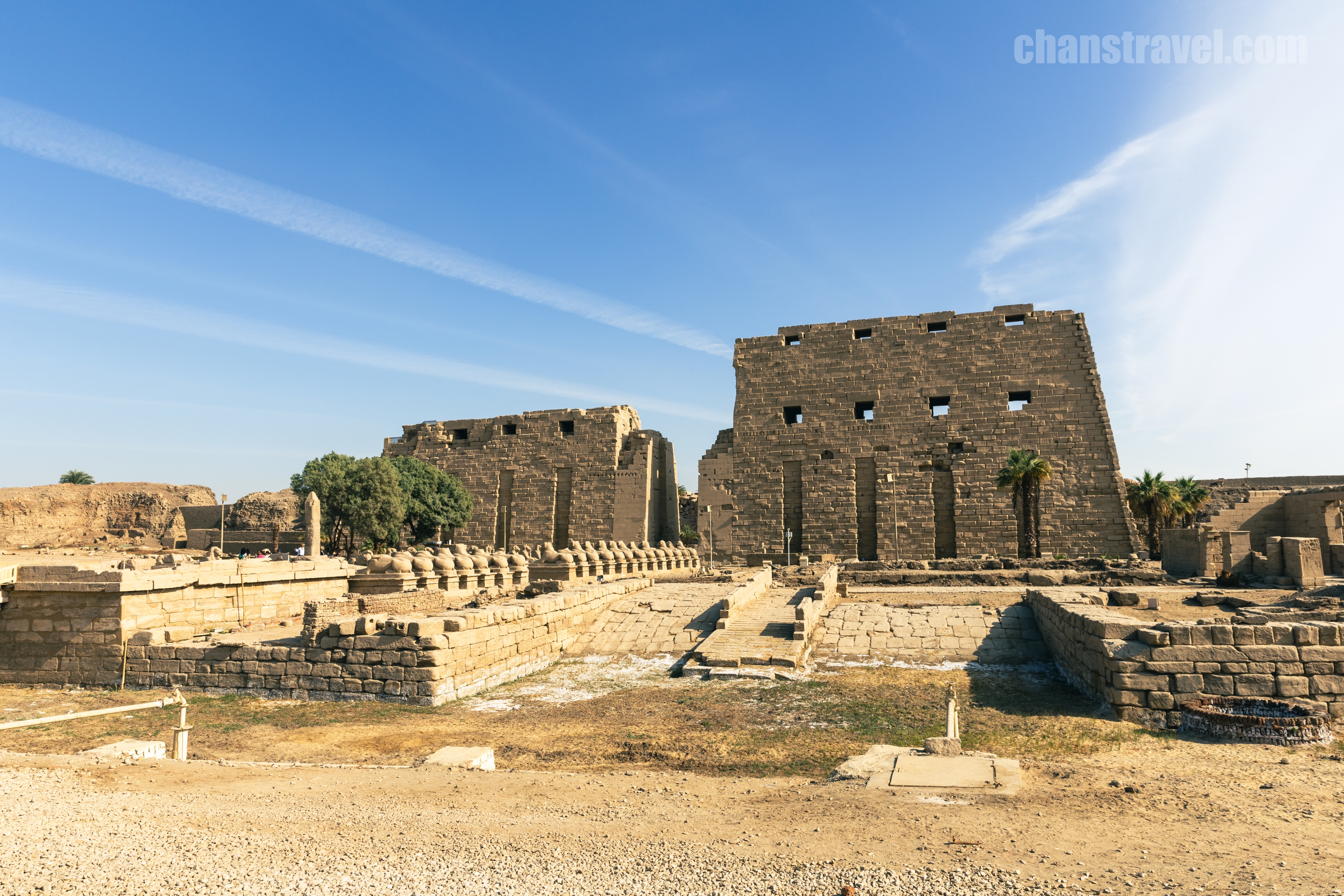
Karnak Temple is the first place you encounter upon stepping onto the East Bank of Luxor. Rather than a mere ruin, it is more like a massive record where thousands of years of time are layered upon each other. These backstories of the temple—not found in textbooks, yet becoming more charming the more you learn—kept catching the feet of our family.
동영상 서비스가 종료되어 해당 콘텐츠를 재생할 수 없습니다.
First, this was a site of 'Pharaohs' Lego play' that spanned 1,500 years. More than thirty Pharaohs tried to prove their greatness by tearing down previous kings' walls or overwriting them with their own names. Second, Hatshepsut’s obelisk displays a paradoxical aesthetic of preservation. Because Thutmose III, who hated her, built high walls to hide it, the obelisk was protected from sandstorms and still emits a smooth glow as if newly made. Third, a surreal scene unfolds near the sacred lake, where countless people circle the giant scarab statue seven times to the left, following the myth that it will grant their wishes.
The highlight of Karnak, the Hypostyle Hall, is supported by 134 massive columns, the largest of which reaches 24 meters in height, evoking a sense of awe toward human-made architecture. As the sun set and the 'Sound and Light Show' began, the columns illuminated in the dark seemed to come alive, taking our family on a time-slip to ancient Egypt. The first day in Luxor deepened, not by the scale of the magnificent ruins, but by remembering the size of the hearts of the people we met within them.